How to Choose a Tamada for an Armenian Wedding
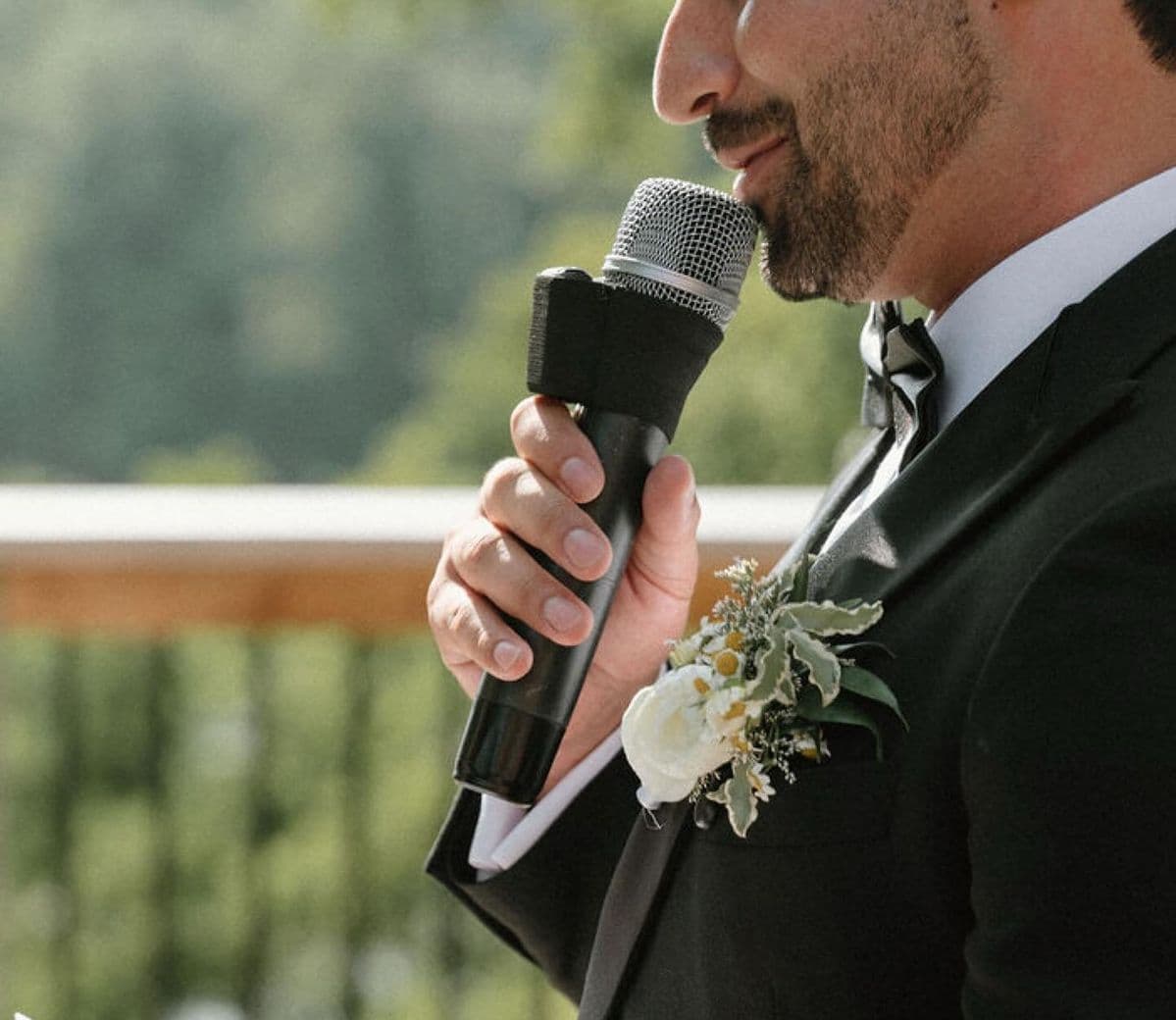
At many Western weddings, the emcee has a function: announce games, cue the cake, start the music. At an Armenian wedding, the tamada — the toastmaster — is effectively the evening's second director, and sometimes its central figure. The person you choose doesn't just shape the entertainment; they set the tone for the entire reception.
Why the toastmaster's role is more central here
An Armenian reception is built around toasts, not games or crowd-work bits. A toast here isn't a quick "cheers" — it's a full speech: to the parents, to the couple, to relatives who've passed away, to friendship, to whatever the next occasion calls for. A good tamada knows how to arrange these toasts into a real arc — ceremonial early on, warmer and more personal as the night goes — rather than simply reading through a list in random order.
At a wedding of 250–400 guests, the tamada also isn't really addressing "the room" — they're working a dozen distinct family clusters seated around long tables. They need to physically hold everyone's attention, including the older relatives in the far corner, who tend to listen to the toasts more closely than anyone else.
Languages and tone
In Yerevan, a tamada almost always works in at least two languages — Armenian and Russian — sometimes adding English if relatives from the diaspora are attending. Confirm the language mix in advance: a wedding where half the guests are flying in from Glendale or Moscow needs a different balance than one where every guest is local.
Tone is worth a separate conversation too. Some toastmasters run the evening in a strict, ceremonial register, emphasizing respect for elders and tradition. Others lean lighter, with humor and show elements. Neither approach is wrong, but they clash badly with expectations if a conservative family ends up with a high-energy tamada, or the reverse.
What to look for in footage from past weddings
Asking for a highlight reel alone isn't enough — it's always the best thirty seconds. Ask for the full, uncut footage of at least one toast, plus a clip showing them working the room between toasts.
Watch for three things. How they move through the room — do they stay planted at a stage microphone, or walk between tables engaging guests directly. How they handle the unexpected — a dead microphone, a late arrival, a relative's toast running far too long. And how they hand off the floor — do they cut off a rambling uncle abruptly, or steer him gently to a close without embarrassing him.
Questions for a first meeting
At an in-person meeting, ask about more than price — ask about process.
- How many Armenian weddings of 250+ guests have you run in the past year? Experience with large, multi-table receptions is a different skill from running an intimate evening for 50–80.
- How do you prepare the script? A good tamada learns the couple's story in advance, the family structure, who's expected to give a toast, and who'd rather not.
- Do you work directly with the DJ or live musicians, or is that a separate arrangement? This determines how smoothly the evening moves between toasts and dancing.
- What do you do if a relative's toast runs ten minutes long? The answer says a lot about their experience with large families.
- Do you have a backup if you're sick on the wedding day? For a large wedding, this isn't an idle question.
A good tamada spends the meeting asking about your family more than talking about themselves. That's a sign they're actually building a program for your specific wedding, not reciting the same script every Saturday.
The tamada and other vendors
A tamada rarely works in isolation. They coordinate with the DJ or live band on the evening's pacing, with the photographer and videographer so key toasts and the couple's entrance get captured rather than missed, and with the venue on food service timing between rounds of toasts. When discussing a tamada, it's worth asking directly which Yerevan DJs or bands they've already worked with — a team that already knows each other's rhythm significantly lowers the risk of hiccups on the day.
How far ahead to book
Experienced toastmasters with a strong track record for large weddings in Yerevan get booked for peak season — June through September — 8 to 10 months out. If your wedding falls on a Saturday in the middle of summer, start looking for a tamada even before you start looking at venues: a popular toastmaster's calendar fills faster than most venues' does.
Find a vendor: Tamadas and hosts · DJs