Wedding Decor and Florals: Trends and Practical Advice
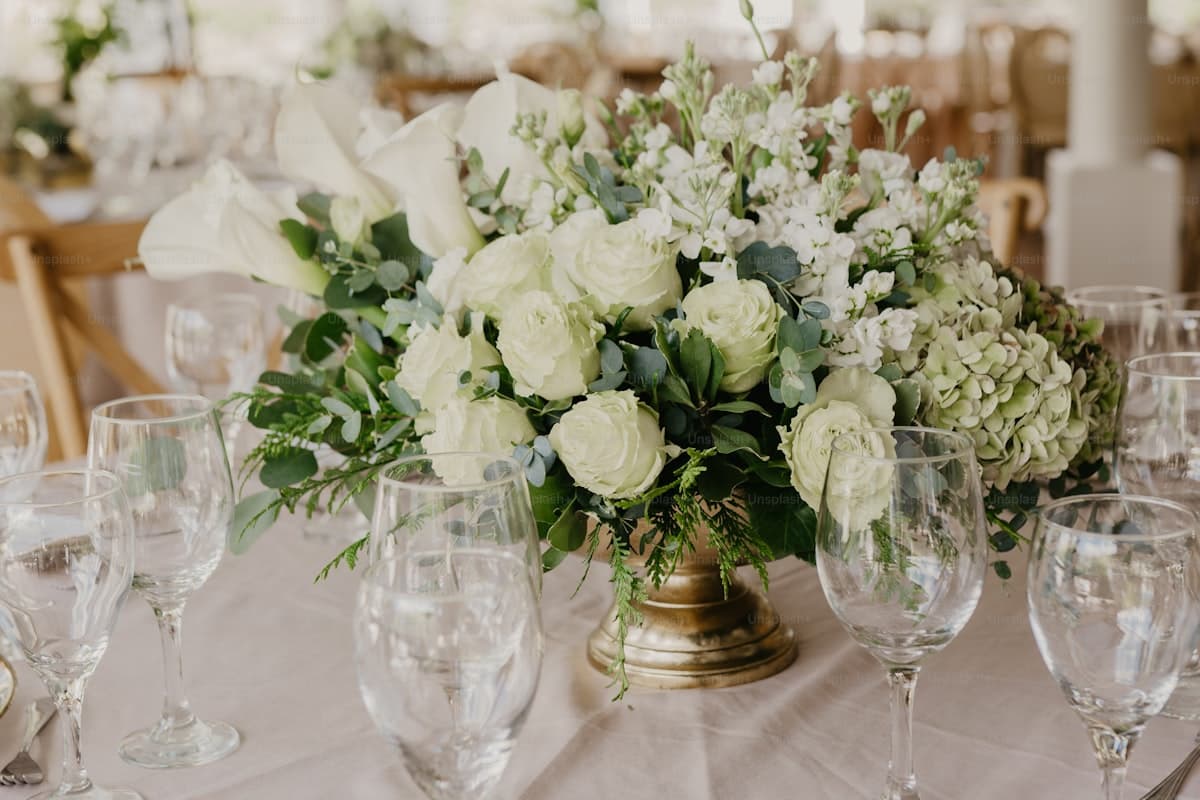
Decor is the budget line where it's easiest to spend three times the plan without noticing in the moment. The reason is simple: decisions get made one item at a time — a bouquet, an arch, a centerpiece — and each one looks affordable on its own. You need to add it all up at once.
Start with the guest count, not the mood board
Before browsing references on Instagram, pin down two numbers: guest count and venue. Decor for 120 people in a loft and decor for 350 people in a banquet hall are different budgets, different volumes, and different logistics, even if the style in the photo looks identical.
At an Armenian wedding, the bulk of the decor budget goes not to the ceremony arch but to the banquet hall itself — the newlyweds' table, centerpieces for 30–40 guest tables, the cake area, sometimes a separate photo zone. That's where the real money goes, not the "Instagram moment" of an outdoor ceremony setup, which is often absent entirely if the couple is married in a church.
Flower seasonality in Armenia
Flower prices and availability in Yerevan swing considerably by month, and it's worth factoring this into the date choice, not just the decor budget.
Spring (April–May). Peak availability for local flowers — tulips, peonies, early roses. Prices are reasonable and the selection is wide. Peonies don't last long, but late May through early June is their season, and florists love working with them then.
Summer (June–August). Heat shortens the life of cut flowers and demands tighter logistics — delivery closer to ceremony time, cooled transport for delicate varieties. Some items (peonies, certain rose types) are either out of season or imported and pricier at the height of summer.
Fall (September–October). The second most popular wedding season and a good balance: temperatures suit flowers well, and the selection — dahlias, chrysanthemums, late roses — is rich.
Winter (November–March). Most flowers are imported, which raises the price by 30–50% compared to seasonal picks. On the other hand, this is low season for venues and photographers, and the savings there often cover the markup on florals.
If the budget is tight, ask your florist for a composition where 70–80% is seasonal and imported accent flowers are used sparingly — in the bridal bouquet or on the newlyweds' table.
Current decor styles
A few directions have stood out in Yerevan over recent seasons.
Natural, "undone" style. Arrangements that look like freshly cut branches and flowers rather than dense spheres. This requires more expensive florist labor per stem but saves on material volume.
Monochrome and muted palettes. Shades of a single color — terracotta, dusty rose, sage — instead of bright contrasts. It photographs well and pairs more easily with the gold flatware and linens many venues already have.
More greenery, fewer blooms. Eucalyptus, olive branches, and various herbs build volume more cheaply than dense floral arrangements while still reading as contemporary.
Candles and textiles instead of flowers. On long tables, part of the centerpiece is increasingly replaced with candle runners and fabric table runners — cheaper than flowers and it won't wilt by the end of the night.
A good decorator won't tell you "what's trendy" — they'll tell you "what holds up for six hours with 300 guests and doesn't droop before the toastmaster's speech." Those are different questions, and it's a mistake to cut corners on the second one.
Balancing the photo with practicality for a large wedding
Social media references are almost always shot for 40–80 guests in an intimate setting. Transplanting them directly onto a hall with 300+ guests is a common mistake.
Table arrangement height. Low centerpieces make it easier for guests seated across from each other to talk — and at an Armenian wedding, entire families sit together and want to converse across the table. Tall vases look striking in overhead photos but get in the way in real life.
Durability around children and movement. Since guests often come as whole families with children at the tables, decor needs to survive a bumped elbow and stay upright when everyone jumps up to dance.
Lighting matters more than decor. Warm lighting changes how a space feels more than the amount of flowers does. Many decorators recommend putting part of the budget into lighting rather than adding more florals — the effect shows up more clearly in photos.
A photo zone pays off only if guests actually use it. A dedicated photo area is a durable trend, but it only makes sense if it's placed conveniently and doesn't block waitstaff movement. Coordinate the location with the venue and photographer ahead of time.
How not to overspend
Three practical ways to trim the budget without losing the room's look:
- reuse ceremony arrangements for the banquet — if the church ceremony is separate, banquet decor is usually done independently, but an arch or floor vases can sometimes be moved over;
- reduce the number of unique arrangements and repeat one or two designs across all guest tables instead of custom-designing each one;
- discuss renting vases, candle holders, and linens with your decorator instead of buying — this can cut the bill by 15–20%.
When to start
Book your decorator and florist 3–4 months ahead, or 5–6 months during peak season (May–October). Florists usually lock in the final flower order 2–3 weeks out, based on current market prices, but the overall style, palette, and volume need to be agreed on well in advance so the decorator can plan fabric purchases and furniture rentals.
Find a vendor: Decor and florals · Venues and restaurants