Getting Married in an Armenian Church: How to Prepare
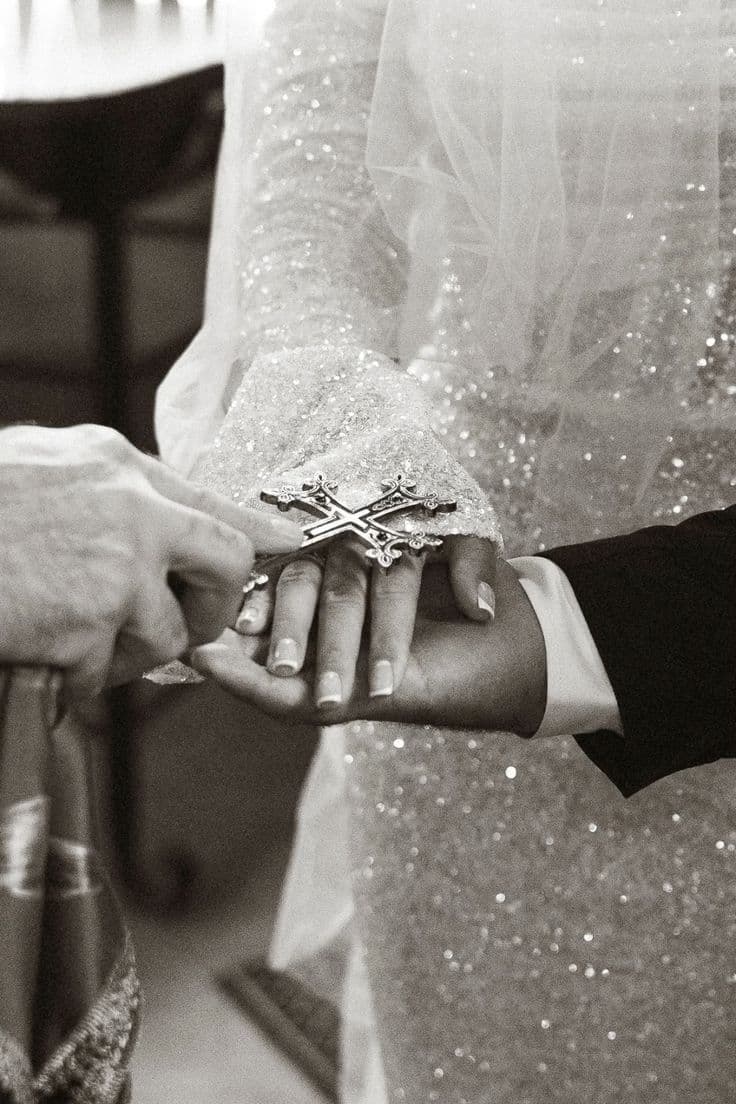
For most Armenian couples, the church wedding isn't an add-on to the banquet — it's the emotional center of the day, and the rest of the schedule gets built around it. Preparing for it works differently than preparing for the reception: there are requirements here that can't be negotiated or swapped out with better decor, and it's much easier to sort them out months ahead rather than the week before the date.
Who can get married in church
The Armenian Apostolic Church marries couples where at least one partner is baptized in the AAC, and both partners need to be baptized Christians — baptism in another Christian denomination is generally not an obstacle, though it's worth confirming with the specific parish. If one partner isn't baptized, the wedding is usually preceded by a baptism, which is its own separate ceremony worth planning ahead of time rather than squeezing in at the last minute alongside the wedding date.
The church also won't marry couples in close blood relation, and requires that a previous marriage, if there was one, be officially dissolved. These questions get worked out with the parish priest at your first meeting.
Paperwork and the pre-wedding conversation
The standard set of documents usually includes both partners' baptismal certificates, ID documents, and, where applicable, proof that a previous marriage was dissolved. It's worth confirming the exact list with your specific church ahead of time — requirements can vary in the details from parish to parish.
Nearly everywhere, a conversation with the priest precedes the ceremony — sometimes one meeting, sometimes several. This isn't a box-ticking formality: the priest explains the meaning of the sacrament, answers questions from the couple and the godparents, and sometimes talks through readiness for marriage more broadly. It's worth scheduling this conversation a month to six weeks before the date, rather than trying to squeeze it into the final week before the wedding.
Godparents (kavor and kavorkin)
The godparents — kavor and kavorkin — aren't a decorative role; they're full participants in the sacrament. They hold the crowns over the bride and groom's heads during the ceremony, and after the wedding they remain the family's spiritual mentors — the couple traditionally turns to them for major life decisions, and they often go on to become godparents to the couple's own children.
There's a practical implication here: the kavor and kavorkin are usually a couple who are themselves married in the church — meaning you choose one married pair, not two unrelated individuals. Choosing your kavor is a long-horizon decision, not just "whoever's convenient to ask," and it's worth making the choice early, since the church may ask for confirmation that the kavor is also married in church or baptized.
Choosing a church
There are dozens of active churches in and around Yerevan, and the choice often comes down to more than how beautiful the building is.
Capacity. A small church isn't physically built to hold a 350-guest banquet crowd — if you're expecting the whole wedding party to fit inside, check the space ahead of time. Many families solve this simply: the immediate circle attends the ceremony itself, and the rest of the guests join at the banquet.
Parish schedule. During the season, especially on Sundays, popular churches can have several weddings back-to-back. Confirm not just the date but the exact time slot, and build in a buffer in case the ceremony before yours runs long.
Logistics to the venue. The distance from the church to the reception venue directly shapes the timing of the whole day — this is worth checking on the ground, not just on a map.
Timing relative to the banquet
In Armenian tradition, the church ceremony most often happens earlier in the day, before the banquet, rather than replacing or following a civil ceremony. The typical sequence is a morning wedding, followed by time for photos with the couple (and often with guests), a move to the venue, and the evening banquet.
Plan for at least two to three hours between the church ceremony and the start of the banquet for travel and photos — cut it too close and guests end up arriving at the venue before the newlyweds and waiting around. It's worth briefing your photographer on the church portion separately: shooting inside the church and shooting outdoors call for different lighting and different etiquette.
Dress code and rules inside the church
Requirements vary by parish, but the general principles hold steady: the bride's shoulders and neckline should be covered, and a head covering — a veil or something similar, functioning as an actual covering rather than just decoration — is often required. Guests are expected to keep knees and shoulders covered, and to avoid the bright feathers, deep necklines, and revealing outfits that are fine for the banquet but not for church.
It's worth letting your wedding stylist know in advance that part of the look needs to work for church: many brides plan a light shawl or bolero specifically for the ceremony, then switch to a more open dress for the banquet.
Photography and video inside the church are usually allowed, but with restrictions — no flash, for instance, or no moving around the altar area. It's worth confirming these rules with the priest and passing them on to your photographer ahead of the wedding day, rather than finding out on the spot.
What to settle in advance
Put together a short list of questions for your first meeting with the priest: who can serve as kavor, what documents are needed, how long the pre-wedding conversation will take, whether photography is allowed, and what time restrictions apply on your chosen date. These details rarely change dramatically from parish to parish, but it's better to hear the answers directly than to rely on the experience of friends who married in a different church.
Find a vendor: Photographers · Decor and florals