How to Choose a Wedding Photographer — What to Look For in a Portfolio
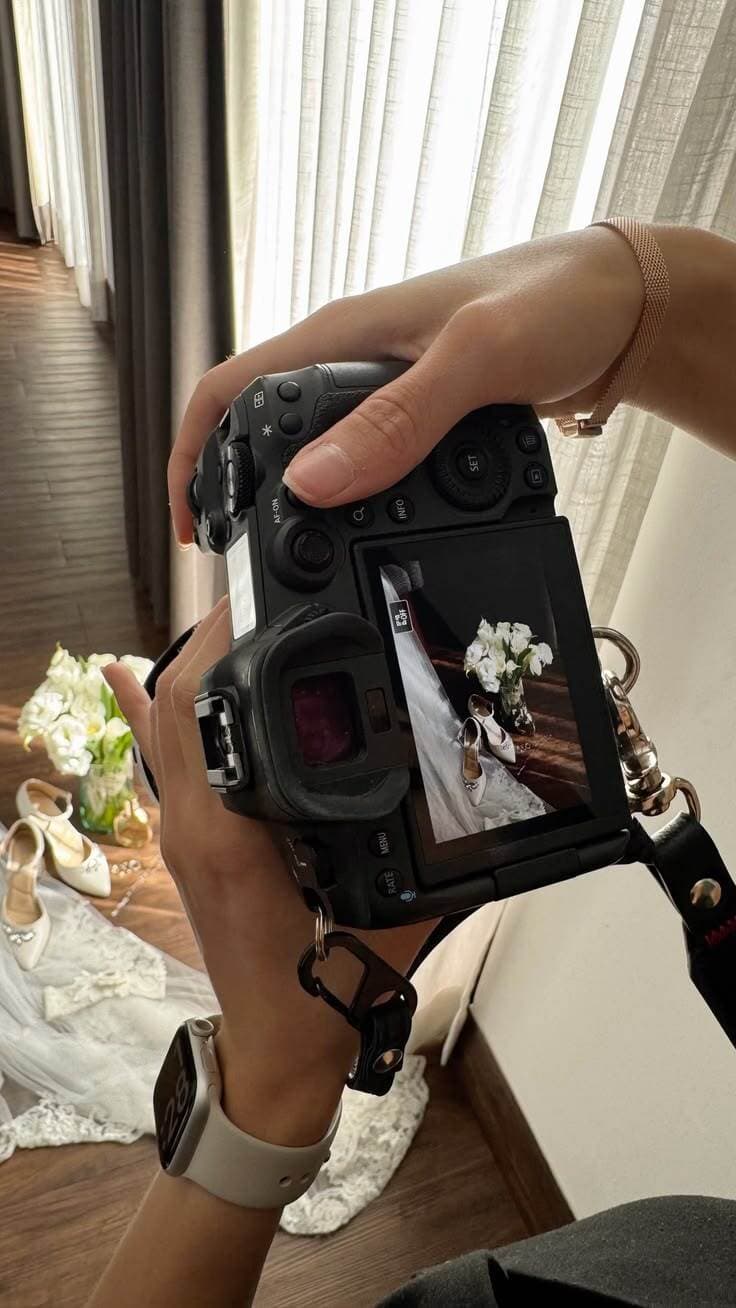
The photographer is the one vendor whose work stays with you for decades, long after the venue, the dress, and the exact wording of every toast are forgotten. Yet an Instagram portfolio almost always shows the best thirty frames pulled from ten weddings, not what shooting your actual day will look like. It's worth digging deeper than the highlight reel.
Documentary versus posed
Wedding photography sits on a spectrum between two poles, and most photographers work somewhere in between.
Documentary (photojournalistic) style — the photographer observes and captures what's happening, intervening as little as possible. Its strength is genuine emotion: real tears during the church ceremony, honest laughter at the table. Its weakness is unpredictability — the result depends heavily on light and timing.
Posed style — the photographer builds the shot: light, pose, composition. Its strength is a consistently polished image, especially for portraits of the couple. Its weakness is that too much posing makes the reception and dancing look staged, as if guests were asked to freeze in place.
At an Armenian wedding with a large extended family and a fast-moving program, a purely posed approach doesn't hold up — there simply isn't time to compose a shot with each of three hundred guests. Look for a photographer who blends both: posed portraits of the couple earlier in the day, documentary coverage of the reception and dancing.
What absolutely has to be captured
An Armenian wedding has moments that can't be reshot, and a good photographer knows them cold.
- The church ceremony. Lighting inside an Armenian church is difficult, and shooting is often restricted in terms of position and flash use — experience specifically with church ceremonies, not just civil registries and banquet halls, matters here.
- The bride's arrival and the welcome at the venue. The moment the bride steps out of the car and is greeted by musicians and family is one of the most emotional and the fastest — it plays out in seconds.
- The ring exchange and the first toasts. The audio of the moment matters as much as the image; some photographers coordinate closely with the videographer so neither gets in the other's shot.
- The reception and toasts from elders. This is where the frames that will matter more than the couple's portraits twenty years from now most often get made — especially if older relatives are present.
- The dancing. Armenian circle dances like shurjpar and kochari are shot differently from a slow dance — they call for speed, a second lens, and a feel for where the peak moment will land within the circle.
What a shooting day covers
In Armenia photographers are not booked by the hour. A wedding means the whole day, from the morning preparations to the end of the banquet at night, and the price is quoted per day. The 6–8 hour packages western blogs describe are barely used here.
So the conversation is not about hours, but about what the day includes:
- Where it starts. The bride getting ready, the groom getting ready, or the moment the groom leaves for the bride — every photographer draws the line differently.
- Which parts. The bride price games, the church ceremony, the blessing at the house, the portrait session, the venue.
- Where it ends. Some leave after the cake and the first dance, others stay to the end. You can see the difference in the photos: on an Armenian wedding the liveliest moments often come late at night.
- Travel outside the city. If the portrait session or the banquet is in a region, ask whether the drive is included and how it is counted.
- The day before. An engagement dinner or a family gathering the night before is a separate day and a separate fee.
Why you need a second photographer
For a wedding under 100 guests, one photographer is usually enough. For a wedding of 250–400 guests, it almost never is.
The reason is simple: the bride and groom are getting ready in different rooms, often on opposite sides of the city, at the exact same time. During the ceremony, one photographer needs to cover the wide shot of the rite while close-ups of the parents' reactions require a second vantage point simultaneously. At the table, the first photographer follows whoever is giving the toast while the second catches the reaction from guests at neighboring tables — and those reaction shots are frequently the liveliest images in the final gallery.
A second photographer isn't a luxury for a bigger wedding — it's a practical necessity for covering everything happening in parallel.
What to check in a full album, not the highlight reel
Ask the photographer for a complete gallery from at least one wedding of similar scale — 200–300 guests — not a curated best-of. Pay attention to how the middle of the reception is covered, not just the first hour: image fatigue by the third hour of the evening is a common weak spot even for otherwise good photographers.
Ask how many edited photos will make it into the final gallery and how long editing takes — for a large wedding this can run from 800 to 1,500+ images, and a reasonable delivery window is typically 4–8 weeks.
It's also worth asking whether the photographer has shot at your specific venue, or one with similar lighting and layout — familiarity with the space saves the first half hour of shooting that would otherwise go to scouting good spots.
The stylist and decor in the frame
The final image isn't shaped by the photographer alone. The decorator's lighting choices, the stylist's work on the bride's look, and the venue's overall color palette are all things the photographer captures but doesn't create. It's worth connecting the photographer with the decorator and stylist ahead of time, even just by email, so everyone understands the day's overall concept and isn't competing for space and time on the day itself.
Find a vendor: Photographers · Videographers