How to Choose a Wedding Date in Armenia
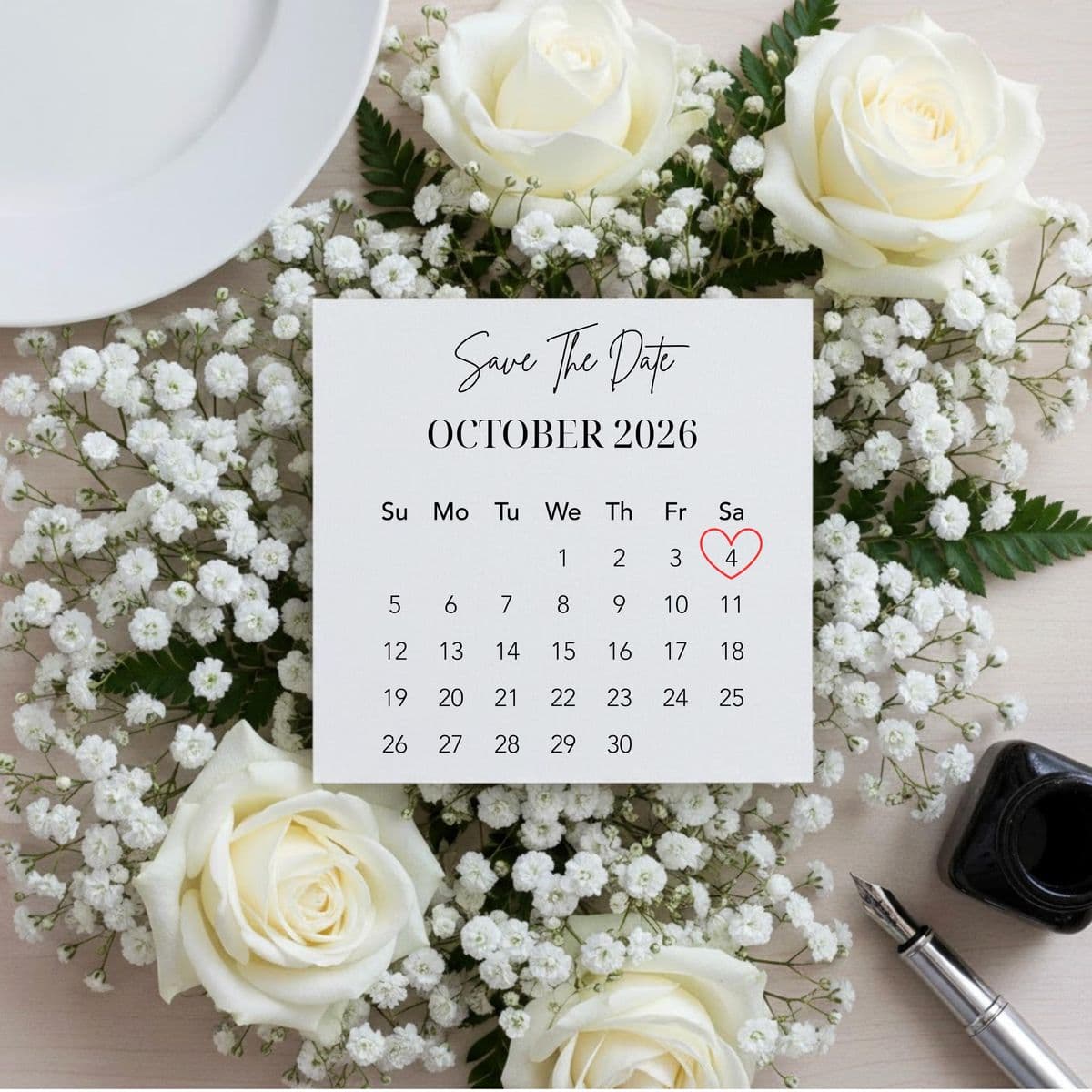
The date shapes almost everything else — venue availability, vendor pricing, weather for the photo session, and even whether the church can marry you on that day. Choose it based on a combination of factors, not on a pretty number on the calendar.
Season: heat, rain, and the sweet spot
Yerevan summers hit 35–38°C in July and August, and for a 300-guest wedding in an indoor hall, that's a real problem if the venue's air conditioning isn't strong enough. A midday outdoor photo session in that heat is hard on the bride in a heavy dress and on guests alike.
May and June. One of the best windows: warm but not exhausting, greenery in full bloom, flowers affordable and plentiful. It's also peak demand — venues and photographers get booked out 10–12 months ahead for these months.
September and October. The second strong season. The heat eases, clear warm weather often holds through late October, and demand is slightly lower than in spring — sometimes you can still land a good venue 6–8 months out.
July and August. Steady heat, but also a steady high season — many families choose these months because relatives from abroad tend to visit on their summer vacation. If you're considering this window, budget for strong air conditioning at the venue and schedule the photo session for early morning or evening rather than midday.
November–March. Low season. Venue and vendor prices drop noticeably and date availability opens up, but you need to plan around guest comfort in the cold and possible restrictions on outdoor spaces.
The church calendar: when weddings aren't performed
For an Armenian wedding, the church ceremony isn't a formality — it's the centerpiece of the day, and the Armenian Apostolic Church doesn't perform the sacrament during certain periods.
Weddings aren't held during multi-day fasts, including Great Lent before Easter (roughly seven weeks) and the Nativity Fast, as well as a number of individual fasting days throughout the year and certain major church feasts. Fasting dates shift from year to year because many of them are tied to the date of Easter, which in the Armenian Church doesn't coincide with the Catholic or Protestant calendar.
This is the first thing to check if a church ceremony is non-negotiable. It's worth confirming your desired date directly with the priest at your chosen church — not just to make sure the calendar allows it, but to actually reserve the slot, since good Saturdays fill up with couples wanting to marry.
Day of the week and price
Saturday is the most expensive and most in-demand day, and popular summer Saturdays get booked out nearly a year in advance. Friday is usually a bit cheaper and still convenient for guests. Sunday means a workday ahead, so some guests may leave earlier, but a number of venues offer a 10–20% discount on the rental for that day.
Weekdays bring meaningful savings — sometimes up to 30% on the venue and some vendor services — but require guests to take time off en masse, which isn't always realistic for 300–400 people that include a lot of older relatives and family from the regions.
Vendor availability by season
For peak dates — Saturdays in May, June, and September — the best venues, photographers, toastmasters, and decorators get booked 8–12 months ahead. Start planning later and your options narrow fast; photographers and venues are usually the first to disappear since they're booked earliest.
If your date is flexible, ask several vendors in the catalog which dates they already have open for the season you want, and work from the overlap of open slots rather than picking a date in isolation from the people who'll actually deliver the wedding.
It's often cheaper to shift the wedding two weeks before or after the peak window than to pay a premium for the most in-demand Saturday of the season, or to settle for compromise vendors just because the date is already locked in.
Weather for photography and logistics
For an outdoor photo session, light matters as much as temperature. Late May through June and mid-September through early October give soft evening light and comfortable temperatures at the same time — something photographers value more than a "pretty" calendar date.
If the wedding falls in winter, discuss a backup plan for outdoor shots with your photographer ahead of time. A snow-covered Yerevan and views of Ararat on a clear winter day make for striking photos, but you need a fallback route in case of bad weather.
A practical way to choose the date
An order of operations that works better than picking a "pretty number":
- decide on the season first, based on weather and budget;
- check the church calendar and confirm with a priest if a church ceremony is required;
- confirm the venue's availability and that of three or four key vendors for your candidate dates;
- pick the day of the week with an eye on how many guests are traveling from far away;
- lock in the date no later than 8–10 months before peak season.
Find a vendor: Venues and restaurants · Photographers